Goals
- To study the effects of management strategies that generate grassland structural heterogeneity on grassland birds, carbon dynamics, Pampas deer, and plants.
- To study whether livestock management and deer conservation strategies converge in their effects on grassland birds, carbon dynamics, deer, and plants.
- To study which combination of management strategies contributes to greater diversity of native birds and plants at the landscape scale.
Sampling design
A total of 40 areas will be studied: 10 sites managed with mechanical logging and 10 nearby unmanaged (control) sites within the National Park (free of livestock), along with 10 burned areas and 10 adjacent unburned sites in neighboring livestock-grazed fields. For each managed site, we will calculate surface area, time since the initial disturbance (burning or mechanical logging) using satellite imagery, and time since the most recent disturbance.
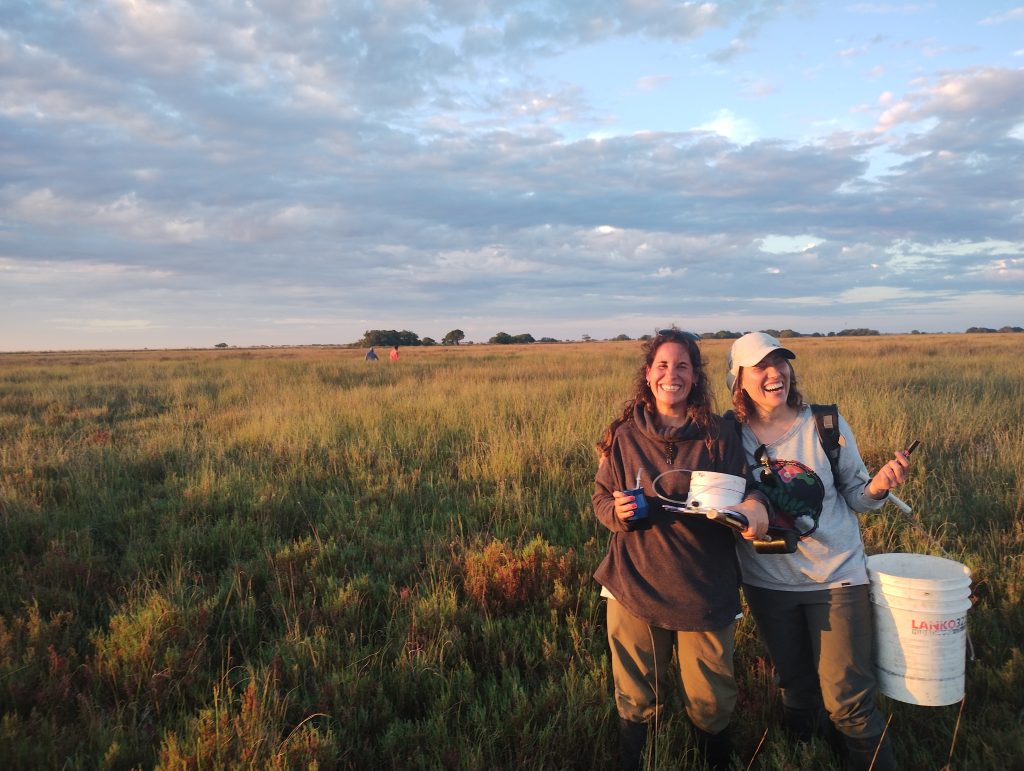
In all 40 areas, bird surveys will be conducted in late autumn and late spring to estimate species-specific abundance. Vegetation will be sampled in spring and late summer to record average height and species abundance. During the same seasons, soil respiration and organic matter decomposition will be measured. Concurrently with vegetation sampling, plant biomass will be collected to assess forage quality, and photosynthetically active radiation (PAR) will be quantified.
At the end of the sampling period, soil samples will be collected to determine organic matter and organic carbon content. Additionally, in areas managed with fire or mechanical logging, camera traps will be deployed year-round to monitor habitat use by Pampas Deer.